Happy passengers
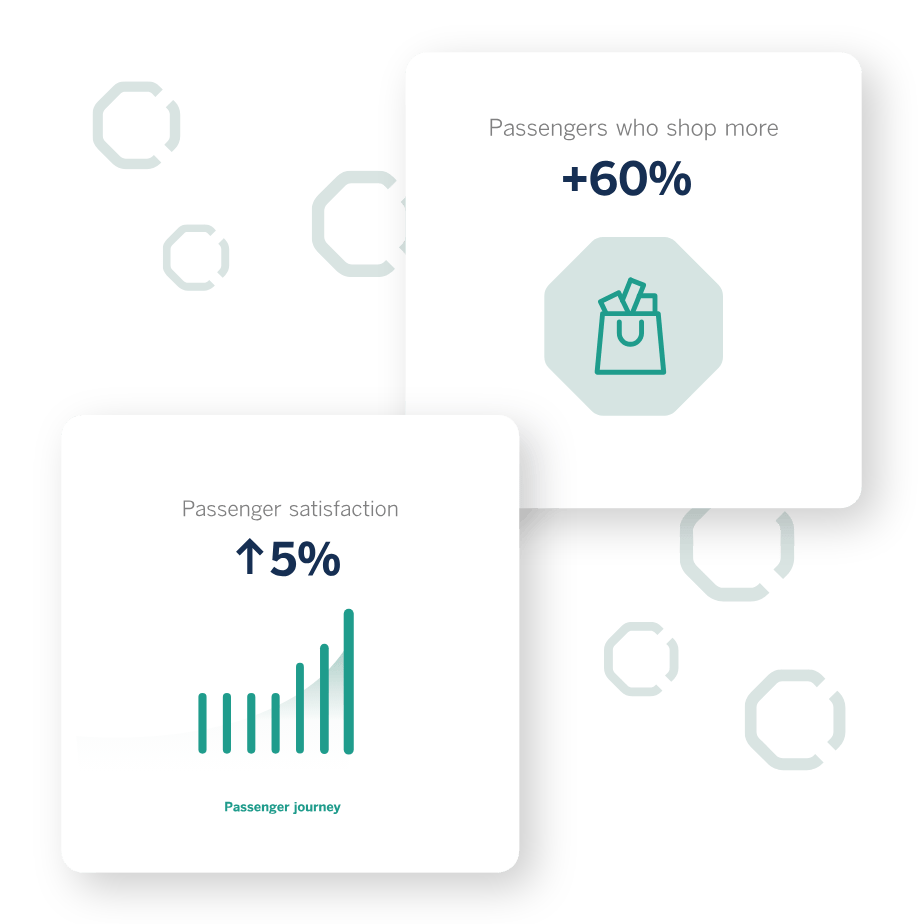
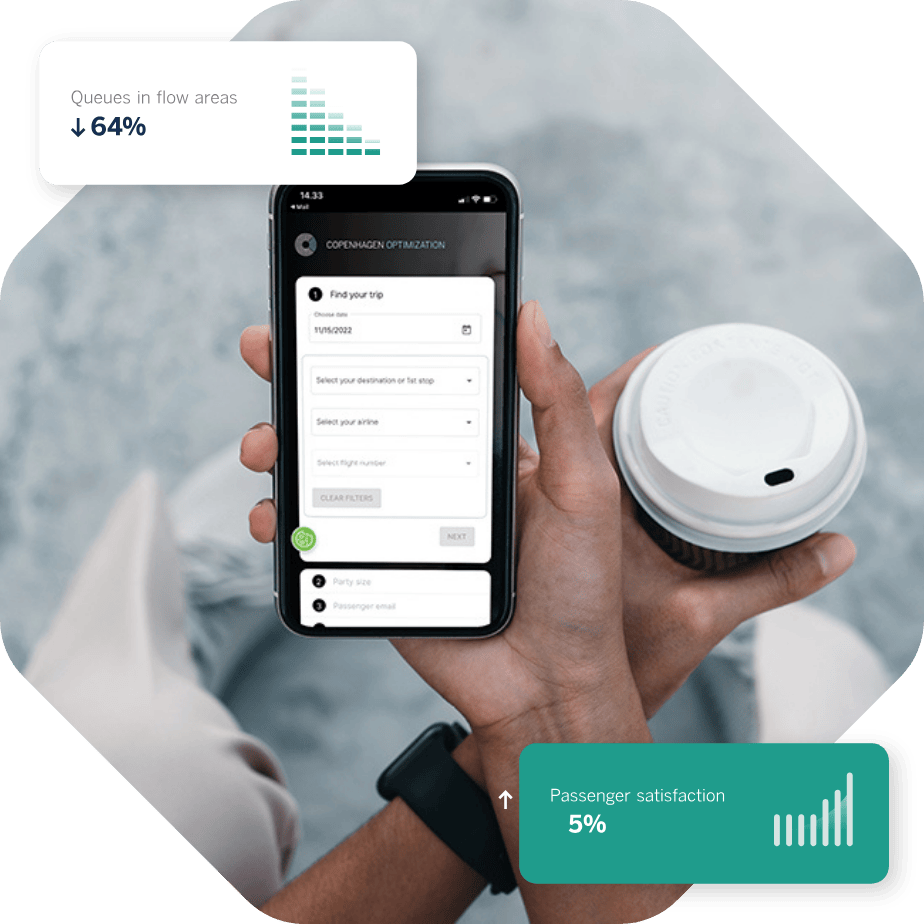
Data shows that more than 9 in 10 passengers are happy or extremely happy about the VQ experience.

Better Virtual Queuing - where you are in control of the passenger arrival curve.
Virtual Queuing lets passengers book a slot at any airport touchpoint in the airport and wait virtually rather than wait in a physical line, thereby eliminating stress and anxiety.
A significant part of the stress related to traveling is the uncertainty of whether passengers will have to queue, how long the wait will be, and whether they will make their flight. Waiting in line or simply worrying about it is a key pain point. By allowing passengers to plan a predictable journey from home to gate, you enable a seamless and stress-free travel experience.
Virtual Queuing is one of the most noticeable new digital solutions for airports – if done right, it will deliver on its promise to reduce wait times, improve the passenger experience, and increase non-aeronautical revenue.
Better Virtual Queuing is part of Better Airport® – the world’s leading connected operations platform for airport operators.
Data shows that more than 9 in 10 passengers are happy or extremely happy about the VQ experience.
By nudging passengers to arrive ahead or after peak times, airports have achieved 10%-15% reduction in peak streamlining staffing and other resources.
Less time queuing means more time for your passengers to eat, drink and shop. More than 60% of users indicate they spend more money at the airport – it’s a winning equation.
By offering passengers the option to choose and book their arrival slots, airports gain control over the passenger journey. This enables airports to influence passenger flows by determining when and where passengers should arrive. Put simply, airports gain the ability to flatten peaks and reduce wait times at checkpoints throughout the airport.

The obvious choice to reduce wait times, improve passenger satisfaction, and increase non-aeronautical revenue.
%20(1).png?width=1920&height=900&name=Mosiac%20baggrund%20picture%20(1920%20x%20900%20px)%20(1).png)
For Virtual Queuing to truly work, it must be more than just a passenger facing solution. By adding an intelligent backend, airports can nudge travelers to arrive at optimal times, reducing wait times, and flattening peaks.
But why would passengers choose to schedule their arrival at a time and a place that is beneficial for your operation? The answer is simple - because you let them take control of their journey, from home to gate. You give them predictability and you remove uncertainty. This is the foundation of the stress-free passenger journey.
Powered by AI and analytics, our Better Virtual Queuing solution adapts slot availability in real time - predicting arrivals, matching infrastructure demand, and maintaining service levels in even most complex airport operations.

Virtual Queuing is an innovative way to boost airport efficiency while creating a smoother passenger experience.
Long queues remain one of the most stressful and unpredictable parts of air travel. Whether it’s check-in, security or boarding, passengers lose valuable time standing in line. Time that could be used better.
By giving passengers the ability to plan their journey, you empower them with peace of mind while giving the airport and its stakeholders more predictable behavior to plan against. Better Virtual Queuing provides real-time awareness of how, when, and where services are used.
And it’s not just for security - Virtual Queuing can enhance nearly any touchpoint, from parking and check-in to immigration, boarding, etc., delivering efficiency for the airport and clarity for passengers.
Hands down the best airport experience. Ever.
We’re enhancing the passenger experience by unlocking a better, more efficient seamless experience to help passengers plan ahead and arrive early.
Our intelligent Better Virtual Queuing solution has the potential to work as a direct messaging channel to passengers. This will not only benefit you as an airport, but all your stakeholders too. By improving the travel experience for the inexperienced travelers who find airports most stressful, we incentivize passengers to take advantage of premium services in the future by delivering value on behalf of our partner airlines.
Keep your offerings separate or deliver a one-step process to your passengers with the boarding card scan integration. We can connect with the e-gate provider of your choice through our open API. Both solutions are seamless and stress-free for your passengers.
Parking, check-in, bag-drop, security, boarding… There are so many different passenger touchpoints – why not make them interconnected? By elevating your Virtual Queuing solution to several touchpoints, you will give your passengers control and transparency of their journey through the airport through a fully integrated and automated set-up. This will require collaboration across airport and stakeholders, but we envision this to be the end-goal of Virtual Queuing for Airports – and we will be there on the side helping you reach your goal.
If you have more than one checkpoint, you are in full control of the available VQ slots at each checkpoint. This will allow you to nudge passengers from one checkpoint to another and thus balancing your loads.
You are enabled to open and close time slots on a flight-by-flight basis, targeting the specific flights that will benefit your operation the most. This allows you to nudge your passengers to arrive before their STD, predicting wait times, and level out peaks.
The solution will automatically allocate VQ slots throughout the day divided on your different checkpoints based on your flight schedule and operational data. But no one knows your airport’s operation better than you, and you will have full access to make the changes you see necessary.
You will have your own dedicated passenger-faced reservation page, which you can brand according to your airport CVI.
Airport virtual queuing lets passengers reserve a time window for an airport process rather than rely only on joining a physical queue when they arrive. Better Virtual Queuing gives airports a way to influence when passengers present themselves. The booking changes access to the queue or checkpoint; passengers still need to attend in person and complete the required process, including security screening where applicable.
Virtual queuing gives the airport a way to offer arrival slots outside its most pressured periods and direct passengers toward suitable checkpoints. The effect depends on which slots are offered and whether passengers use them. The offer should reflect the capacity available to serve it, including demand from passengers without a reservation. Airports should assess the effect on the full arrival pattern, rather than assume that moving people into a booking system automatically removes congestion.
Better Virtual Queuing can allocate slots using the flight schedule and operational data, with availability managed across checkpoints. Airport teams can adjust the offer rather than present the same number of reservations throughout the day. Scoping should establish the service capacity behind each slot, which flights are eligible and how changes are handled. The technical data feeds and operating rules should be agreed for the specific airport.
Better Virtual Queuing supports reservation validation through a separate QR code or through boarding-pass integration. The choice depends on the airport's access setup and agreed integration. Airports should confirm the validation workflow, exception handling and operational responsibilities before deciding how passengers will enter the reserved lane.
Virtual queuing influences when passengers arrive for a process. Security planning determines the lane-opening plan needed to serve demand, while check-in planning addresses counter opening and allocation. Better Virtual Queuing, Better Security and Better Check-in therefore address different decisions. A reservation does not itself open a lane, allocate a counter or carry out screening.
Better Virtual Queuing is used for processes including check-in and passport control as well as security. The relevant question is whether a reserved arrival window fits the local process and the stakeholders responsible for it. Each touchpoint needs its own operating design, capacity assumptions and passenger instructions. An airport should confirm the supported implementation rather than assume one reservation automatically covers the complete journey from arrival to boarding.
An airport needs a clear passenger offer and an operating process behind it. Define the participating checkpoint, reservation access, passenger communications and responsibilities for helping people on arrival. Booking windows, eligibility, late-arrival rules and group limits should be set by the airport and reflected consistently in its reservation page and passenger help information.
Measure both passenger participation and the operational effect. A useful evaluation can compare slot availability, bookings, attendance and passenger arrival patterns with checkpoint performance over comparable periods. Include the experience of passengers who have not booked, as well as those who have.

Better Airport is a cloud-based airport management platform that gives airports of all sizes a simpler way to run core operations. The core modules of the Better Airport suite can be mixed and matched to fit your operational needs.
Click on the modules below to learn more.
Predicts flows and wait times.
Intelligent counter allocation.
Optimized lane opening plans.
Immigration check point operation.
Baggage flows - outbound/reclaim.
Automatic allocation of stands and gates.
Fully automated staff planning.
Shift patterns that meet any staffing demand.