Better Stand & Gate FAQ
What does airport stand and gate allocation software do?
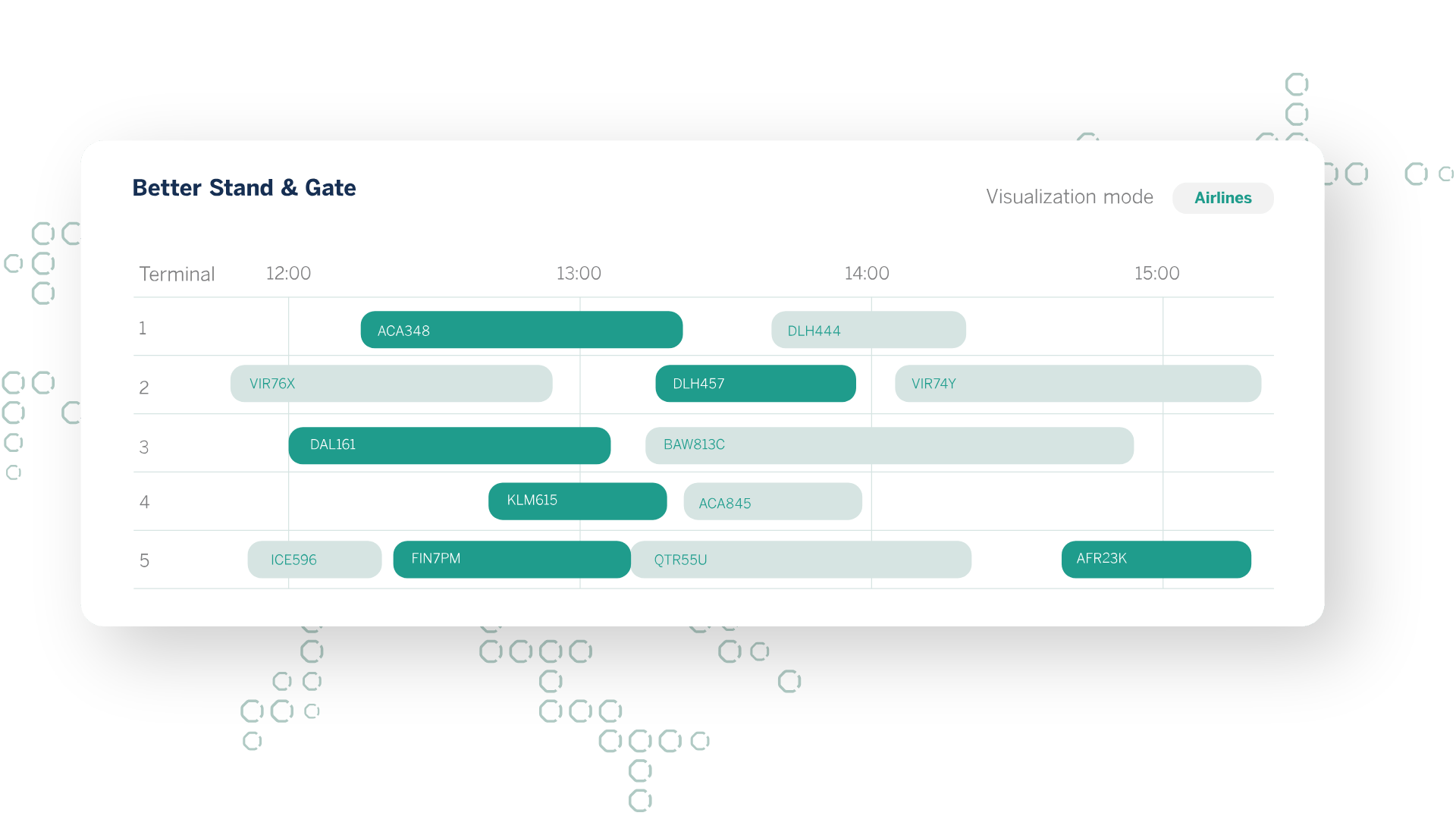
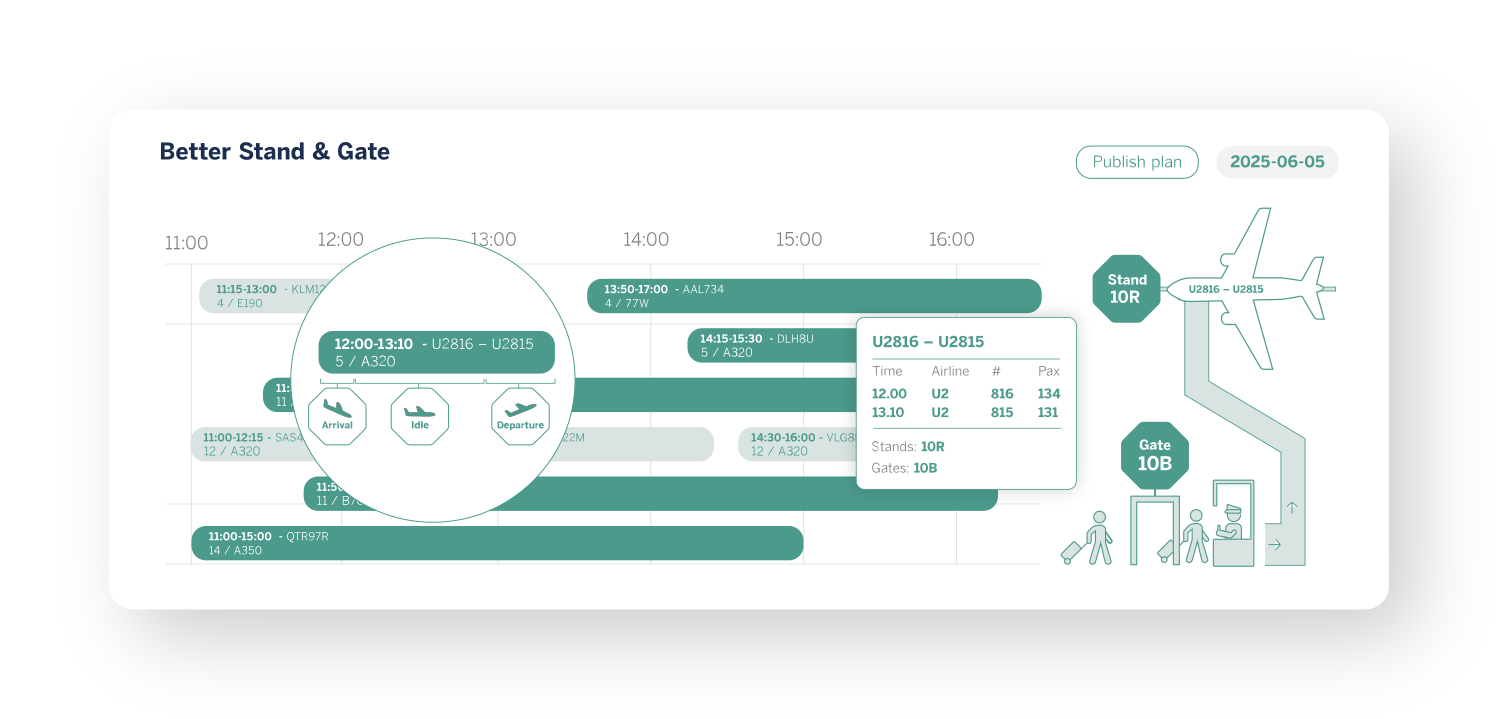
Airport stand and gate allocation software assigns aircraft parking positions and passenger gates while accounting for the operation's rules and priorities. Better Stand and Gate supports that planning task, including towing and multi-day stays. It is intended for decisions about how stand and gate infrastructure is used, rather than as a general replacement for every system involved in airside operations.
Which rules can influence an airport's stand and gate plan?
A stand and gate plan must reflect the airport's physical layout and operating priorities. Better Stand and Gate includes stand dependencies, gate types, airline preferences, and busing requirements. The airport should identify which conditions are mandatory and which are preferences during configuration. That distinction matters when available capacity cannot satisfy every preference and planners need to understand the trade-offs in an allocation.
Can stand and gate allocation plans respond to flight delays?
Better Stand and Gate supports operational replanning using updated information from connected data sources, including the airport's AODB. This allows the allocation plan to be reconsidered as the flight operation changes. What happens automatically depends on the agreed data feeds and operating workflow. Airports should confirm which updates trigger replanning, what stays protected and how a revised plan is reviewed before operational use.
Can stand allocation take account of towing and remote stands?
Towing and remote-stand operations are part of the stand allocation discussion, because a stand plan can create demand for additional movements and passenger transport. Better Stand and Gate includes towing in its scope. Copenhagen Optimization's Sydney work also included a customized busing model.
How can airports test whether existing gates can accommodate a new route?
Airports can compare allocation scenarios using the proposed flight schedule, existing traffic and agreed operating constraints. Better Stand and Gate was used at Minneapolis-Saint Paul to compare terminal options for a new international service. The study examined towing requirements, time between aircraft at gates and unallocated flights. This makes the discussion about operational trade-offs, rather than treating an apparently empty gate as proof of usable capacity.
What should an airport prepare before implementing stand and gate allocation software?
Prepare a representative flight schedule, a description of the available stands and gates, and the rules that currently drive allocations. Include the people who own those rules, so the team can distinguish physical restrictions from preferences or inherited practice. The implementation scope should also identify data sources, operational users and how planning results will be validated.