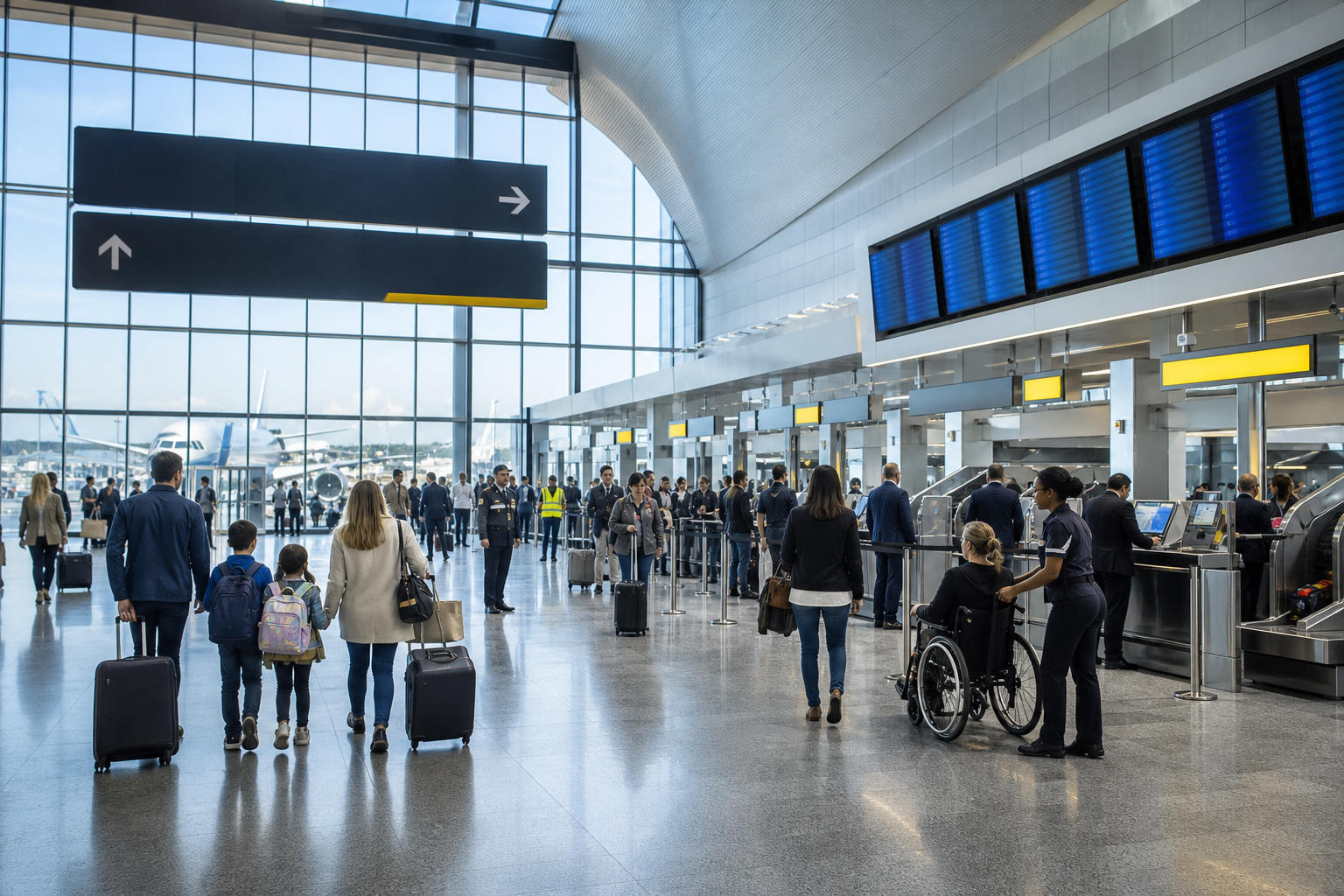
Rolling out the Entry-Exit System (EES) has come with its share of challenges: extremely long queues, frustrated passengers and staff, and a potential hit to European travel. But it’s not the first time airports have seen winding queues, a mismatch in staffing, or siloed communication.
Time and time again we have seen airports struggle with reactive operations, only taking action after issues arise. But the most successful airports we have worked with know this for certain: Operational resilience isn’t about responding faster. It’s about planning together earlier.
Common operational problems before and after the EES rollout
Every airport has its own set of operational challenges. However, EES pushed five common ones into the spotlight:
- Reactive staffing: Waiting for the queue to form before calling backup
- Fragmented planning: Ground handlers, airlines, and border control operating in silos
- Limited scenario planning: Having a Plan A, but no shared Plan B or C
- Disconnected stakeholders: Operating on assumptions rather than shared data
- Lack of visibility: No single source of truth for the day’s operational flow
The EES rollout is the latest wave of complexity in travel and aviation. Once the initial friction resolves and it becomes fully integrated into operations, the complexity of running an airport won't disappear. Whether it's a sudden shift in airline schedules, extreme weather, or the next regulatory wave, the next challenge is on its way.
To be fully prepared, there are concrete changes that will make the difference for airports: better forecasts, continuous planning, and stronger collaboration.
Resilience starts before the queue forms
An operational plan isn’t something you print out at the start of the day, the week, or even peak season. True planning is continuous, dynamic, and constantly adjusting to real-time inputs. The ability to pivot that plan is as critical as the initial forecast.
Start with forecasting
Using historic, live, and predictive data about passenger numbers and flight schedules, passenger forecasting sets the airport staff and border control up for joint success. It is central to:
- Properly staffing immigration, customs, security, and baggage handling
- Reducing bottlenecks, wait times, and delays at check-in, security, and immigration
- Improving the passenger experience from curb to gate
While detailed forecasting applies to running EES at the border, it should also connect plans across operations.
Reduce risks and surprises with scenario planning
To be as prepared as possible, airport teams should use those forecasts to visualize different versions of the day.
Instead of planning for a single average processing time under EES, run "Low, Medium, and High Friction" scenarios in a shared planning environment. Consider vague and specific situations alike:
- Language barriers
- Technical glitches that double processing times
- A wave of non-Schengen arrivals increase processing times by 45%
The same goes for security lane rushes:
- A CT scanner goes down
- 4 security staff call in sick with the flu
- A charter flight full of families increase processing times by 20%
As well as irregular operations scenarios (IROPS):
- Heavy fog forces morning departures into the afternoon
- Baggage handling system malfunctions for 45 minutes
- 3 wide-body aircraft are rerouted to your airport due to weather
By simulating different scenarios days in advance, airport staff and their partners can work together to predict the exact moments that queues will build up. Instead of reacting when the situation occurs, you proactively increase staff numbers, activate contingency plans, or adjust gate allocations.
One airport, one plan, one operational picture
In many airports, stakeholders are using different tools and working off different assumptions. They’re also in charge of their own step of the journey: airports focus on passenger experience; border authorities manage immigration; airlines are always trying to keep schedules.
But forecasts and scenario plans are only worthwhile when shared.
When everyone works from the same operational picture, decisions are made collectively, proactively, and with confidence. However, without a tool to enable that level of transparency and collaboration, it’s difficult for operational staff, border control, and airport partners to make this happen.
Collaborate confidently under EES and other major changes
The future of airport operations belongs to the teams who look at the same data, share the same plan, and make decisions together long before the queue forms.
We’re here to help you build that future.
We built Better Airport to help you survive more than a single regulatory rollout. Its planning, real-time management, and staffing capabilities give you the confidence to run a unified, resilient operation every single day.