Skip to content
Bags positioned in front of an airport baggage handling belt
Better Baggage

The future of airport baggage management systems

Where baggage handling is a well-oiled machine.

London Gatwick logo_header-testimonial_white-1
London Heathrow airport logo
YVR Vancouver airport logo
YYC Calgary airport logo
CPH airport logo

Maximize your baggage infrastructure with Better Baggage

Imagine a baggage management system that keeps baggage flows balanced and baggage handling systems running smoothly. A system that enables smooth, dynamic, and flexible baggage planning, baggage reclaim, and reduced reclaim wait times. This is Better Baggage: The baggage management system to keep your baggage infrastructure running at full capacity.

Better Baggage is a cloud-based SaaS solution accessible through your preferred web browser. The baggage management system is designed for strategic, tactical, and operational planning. 

The solution analyzes all baggage flows, and helps you understand where and why bottlenecks occur and how to improve the flow of your baggage handling system. This allows you to make well-informed planning decisions and keep your baggage handling running like a well-oiled machine.

Better Baggage is part of Better Airport® – the world’s leading airport connected operations platform for airport operators.

Top 3 Benefits of Using an Airport Baggage Management System:

Make data-driven short- and long-term decision

Understand your future needs while ensuring optimal day-to-day operations.
 

Easy internal and external co-operation

Get everyone on your team on the same page while collaborating with handling agents and other third parties.

Save time and money with automation

Allocate a full week's worth of resources in seconds by eliminating manual processes.

Passenger retrieving baggage from baggage claim belt at airport
Case Study

Better Baggage reclaim: Faster reclaim, happier passengers

In many airports, suboptimal  baggage handling flows cause unnecessary, long wait times for passengers at baggage reclaim. The first bag/last bag timestamps are unreliable; the baggage reclaim belt allocation is fixed, and the plan is difficult to adapt to the inbound flight arrival times. Better Baggage reclaim is the solution to these issues — and much, much more.

By analyzing baggage load and passenger arrival curves, Better Baggage reclaim gives you a fast and easy way to streamline the reclaim experience and optimize the flow of your baggage handling. The plan automatically updates based on the latest arrival times, bag load, and passenger data. This enables you to evenly distribute your baggage handling infrastructure and improve the passenger experience at reclaim. And when a belt does get congested, Better Baggage alerts you so you can act quickly. This helps to reduce wait times, free up capacity, and improve passenger satisfaction at your airport.
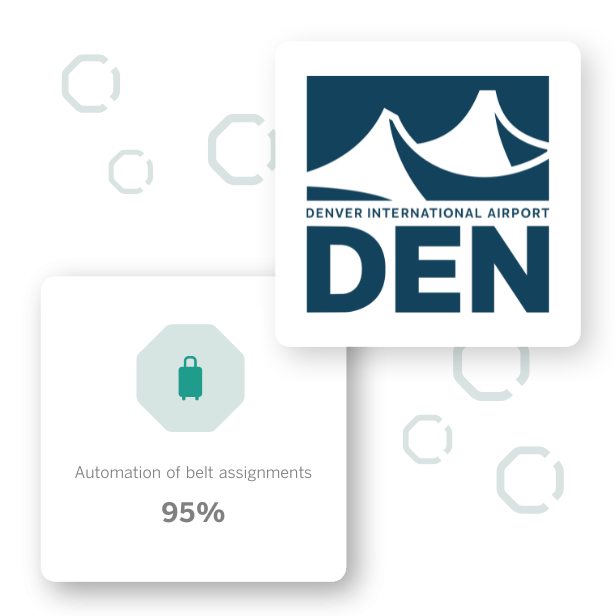
Illustration of our denver case with the logo on it
Case Study:

Smarter baggage reclaim at one of the world’s busiest airports

Denver International Airport faced growing pressure in its international arrivals area: limited reclaim belts, increasing traffic and no real-time visibility into belt usage. Manual planning and list-based systems led to bottlenecks and passenger delays - especially during peak periods.

By rethinking reclaim operations with Better Baggage, DEN introduced automation, visibility and data-driven decision-making into a previous manual process.

What changed in just one month?

  • 30% reduction in overlapping flight allocations
  • 95% automation of belt assignments
  • Faster planning and fewer manual interventions

Read how a focused proof-of-concept optimized baggage reclaim and how DEN is scaling its approach with Better Airport.
Streamline your outbound baggage handling for greater efficiency

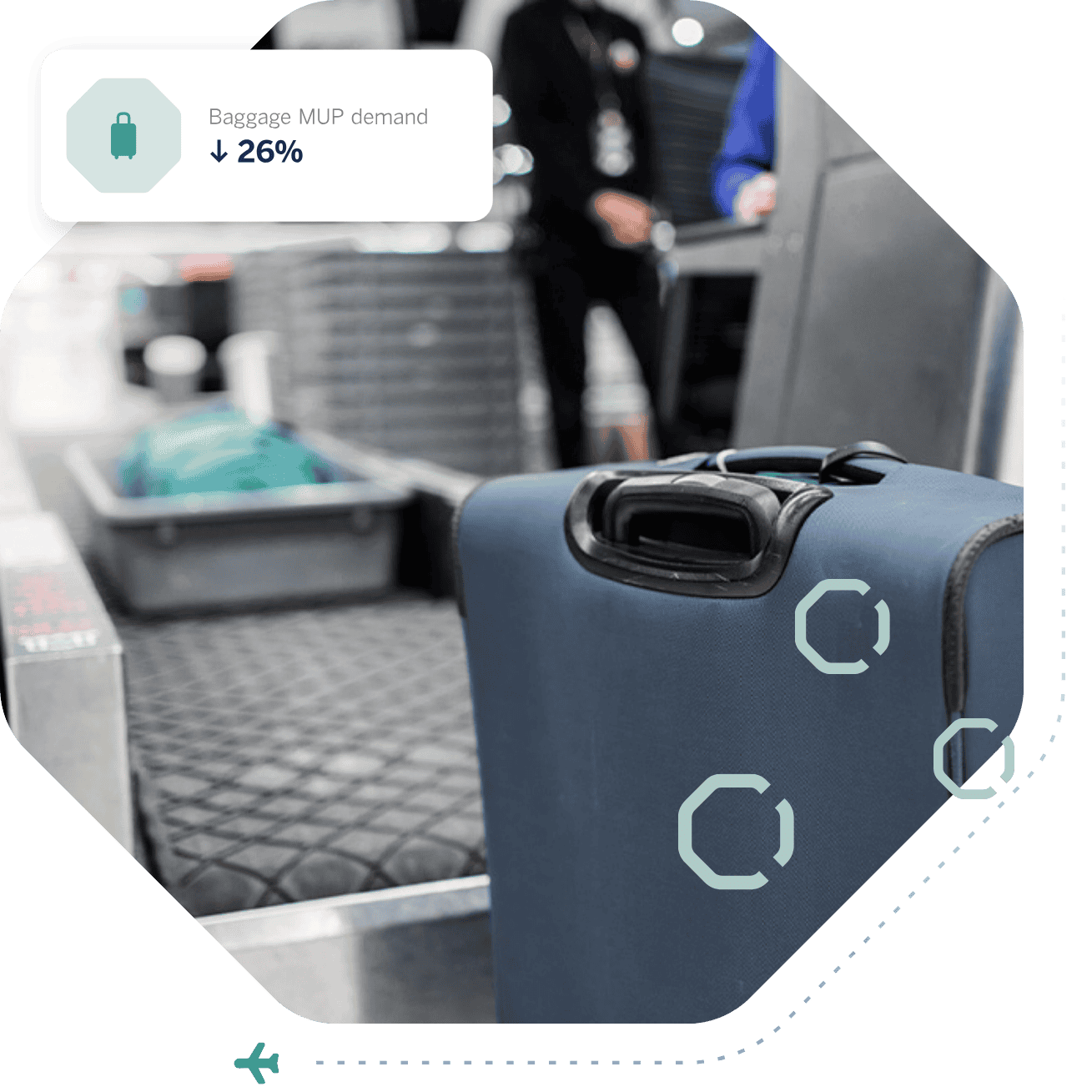
With accurate daily forecasting of incoming bag numbers, Better Baggage is the baggage management system that enables your airport to optimize its make-up positions (MUP), early bag storage (EBS) set-up, and baggage handling flows. Switching from seasonal planning to dynamic daily planning means you’re always using your MUP resources optimally while your EBS is never overloaded. A live integration also allows for data-driven decision-making on the spot.

A cloud-based SaaS solution, Better Baggage requires no on-site installation and is accessible through your preferred web browser. All users are looking at and working with the same updated plans. The baggage management system produces plans automatically upon calibration and eliminates manual processes. This enables baggage MUP allocation to be done in 30 minutes for a full week, allowing you to optimize your outbound infrastructure, optimize the potential of your baggage handling system, and bring your baggage management into the future.

Thumbnail of our baggage webinar
Webinar

Could your baggage system do more?

The key to optimizing baggage processes lies in using the vast amount of data within baggage systems - yet many airports don’t use it to its full potential.

In this webinar we demonstrate how Better Baggage unlocks that potential. Kasper Hounsgaard shares practical, step-by-step strategies to keep operations smooth, minimize belt delays, and make the most of the data you already have.

You’ll discover:

•    what drives baggage demand
•    how to read arrival curves
•    how to use inbound and outbound data effectively
•    proven strategies to reduce congestion

Passenger placing his luggage onto the baggage belt at an airport

Better Baggage FAQ

What is outbound baggage planning software?

Outbound baggage planning software helps airports plan how departing bags use available baggage infrastructure. Better Baggage Outbound focuses on allocation decisions, including make-up positions, using expected baggage demand. The planning question is where capacity is needed and when. This gives airport teams a basis for reviewing their outbound plan alongside the flight operation and the resources available to handle it.

Why should make-up positions be allocated using baggage demand?

Baggage demand can vary even when a flight keeps the same departure time. Allocating make-up positions only through fixed seasonal arrangements can overlook changes in bag volumes and when those bags reach the baggage hall. Demand-based allocation considers that daily pattern. Airports and handlers can then review whether existing allocation rules still fit the workload, rather than assuming the previous plan remains suitable.

What data should an airport prepare for outbound baggage planning?

Start with the flight operation, expected bag volumes and the timing of bags entering the outbound process. The planning discussion should also cover the available infrastructure and the rules governing its use. Better Forecast can provide baggage-flow forecasts. The implementation team should confirm which feeds are mandatory, their required detail and how missing or delayed data will be handled before agreeing the integration scope.

How does outbound planning relate to early bag storage?

Early bag storage needs to be considered alongside make-up allocation because bags can reach the baggage system before their planned handling window. Better Baggage includes planning for the early bag storage setup as part of outbound operations. The airport should agree how storage capacity and operating rules enter the plan, including what happens when conditions change. 

Does Better Baggage Outbound replace the baggage handling system?

Better Baggage Outbound should be scoped as a planning and allocation layer alongside the airport's baggage handling operation. An airport should distinguish allocation decisions from the equipment and systems that physically move, screen or track bags. During scoping, agree which data will be exchanged, who owns each operational action and which systems remain responsible for execution.

How is outbound baggage planning different from baggage reclaim planning?

Outbound planning concerns departing bags and the resources used to prepare them for departure. Reclaim planning concerns arriving bags and the belts where passengers collect them. The two have different constraints and performance measures. 

How can an airport evaluate the value of outbound baggage optimization?

Compare a representative baseline with an alternative plan using the same flight demand and agreed operating rules. Useful measures include peak demand for make-up positions, allocation pressure and planner intervention. Include handlers in the review so that proposed changes are workable. At Toronto Pearson, Copenhagen Optimization studied check-in and outbound baggage together before additional capacity was considered, illustrating an evaluation approach rather than a guaranteed result for another airport.

Female passenger sitting at airport gate using smartphone while waiting for boarding

The Better Airport software suite - get to know us module by module

Better Airport is a cloud-based airport management platform that gives airports of all sizes a simpler way to run core operations. The core modules of the Better Airport suite can be mixed and matched to fit your operational needs.

Click on the modules below to learn more.