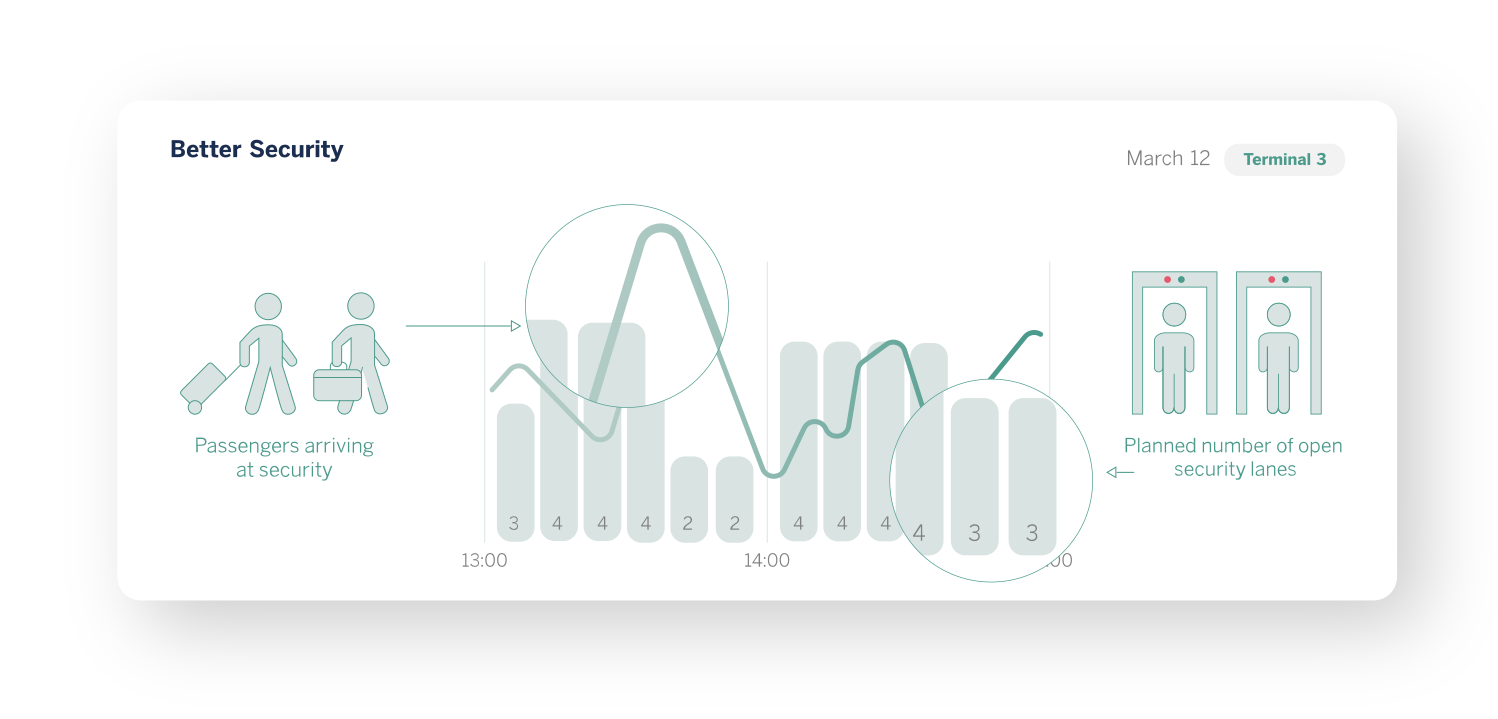
Algorithmically precise planning
Better Security uses forecast passenger demand and checkpoint capacity to recommend how many security lanes to open and for how long, helping you plan against your wait-time targets.
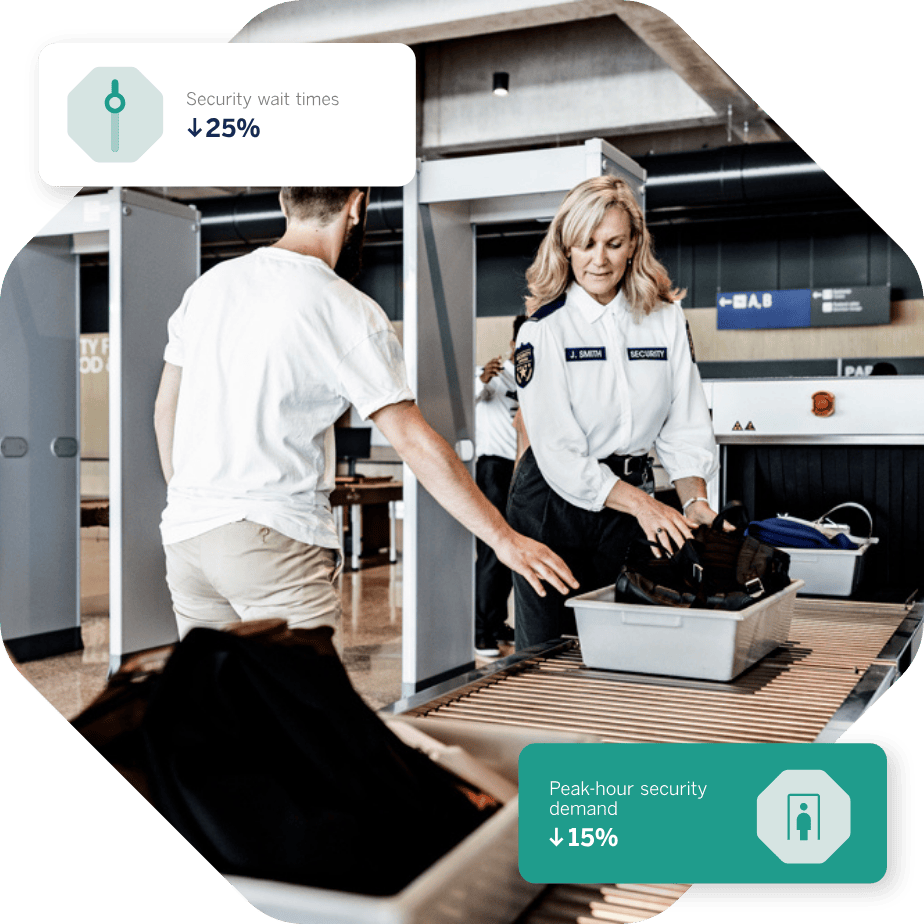

Security is every airport’s ultimate ‘need-to-have’. Teams must combine a thorough approach with speedy operations, all while maintaining the highest security standards possible. Better Security software gives you the information you need to deploy optimal physical and human resources during high-volume moments and throughout the day.
When teams trust their lane strategy, that means less stress and sharper decision-making skills - ensuring a smoother and safer experience for passengers from the time they step in line.
Better Security is part of Better Airport® – the world’s leading connected operations platform for airport operators.
Better Security uses forecast passenger demand and checkpoint capacity to recommend how many security lanes to open and for how long, helping you plan against your wait-time targets.

Whether the bottleneck is an x-ray machine, CT scanner, or doorway, our airport security software helps you plan around it.
Airport operators and security teams can access the tool from anywhere in the airport, using data and automation to eliminate slow and costly manual processes.
Optimized lane plans indicate the number of lanes to open in 5-minute increments, ensuring you can make changes when appropriate. By integrating with automated passenger tracking solutions, Better Security automatically updates the recommended lane opening plan to reflect changes. In the same way, a live integration with the flight schedules updates in case of any delays or cancellations, instantly triggering a new recommended plan.

Unlike traditional forecasting, Better Forecast is a cloud-based software that covers everything from passengers, baggage flows, transfer data, and hold systems on a per-flight basis. With accurate forecasts, airports can combat capacity constraints and security challenges by optimizing resources in response to live and historical passenger data.
By focusing on the effectiveness of security checks, operational efficiency, and passenger satisfaction, even the busiest airports can predict and address bottlenecks in their security operations. The primary causes of long wait times are:
All this can be mitigated through realistic planning and the ability to adapt when the day doesn't go according to plan. By empowering staff to adapt in real-time, airports can reduce queues during peak times, ensure smoother security operations, and improve the overall passenger experience.
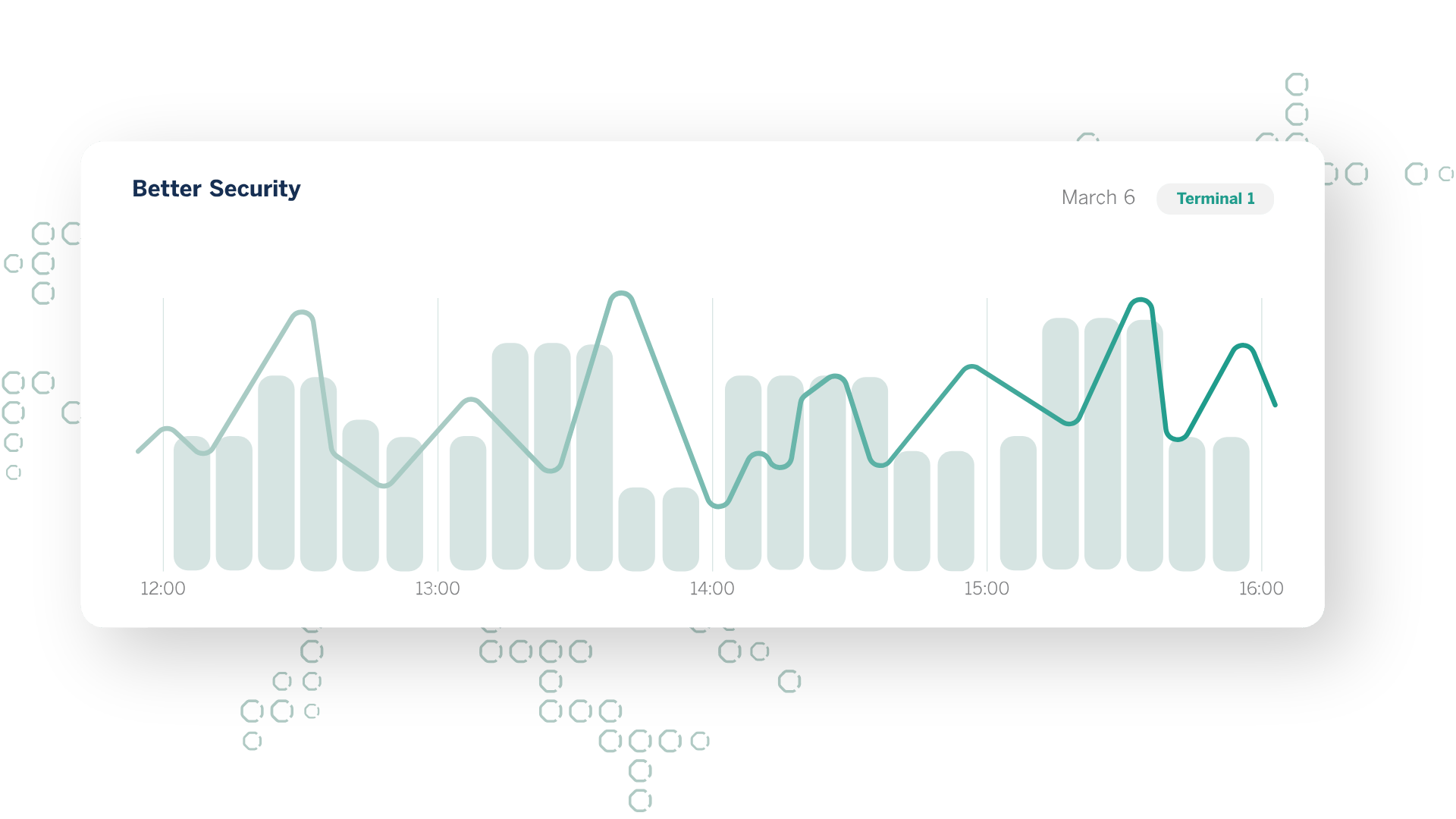
Ensure the right number of security staff at the right time thanks to full transparency of passenger numbers. The plans for staff and lanes work in tandem, enhancing your ability to plan for the appropriate number of security agents based on the lane configuration. The estimated demand for staff is compared to the available amount of staff to identify and address any gaps.

Airport security lane planning software helps teams decide how many screening lanes to open and when. Better Security is the checkpoint-planning module within Better Airport. It connects expected passenger demand with available processing capacity so planners can assess a lane-opening plan and its staffing implications before the checkpoint becomes busy.
Better Security shows planned lane openings, processing intensity, and expected wait times in 5-minute intervals. Throughput and staffing levels can be configured for each lane, so the plan reflects how your checkpoint actually operates.
Start with passenger forecasts, measured throughput, and waiting-time records. Boarding-pass scan data can also be useful where it’s available and relevant. The project team will confirm which datasets are suitable for your checkpoint.
Yes. Better Security can replan based on operational reality, such as queue length, to update the lane-opening plan as the day develops.
CT implementation changes the dynamics of the throughput, and opens up new possibilities. We support the transition by configuring lane by lane, so it’s possible to have different technical setups. Additionally, we allow for both passengers and image throughput, so we always plan according to the bottleneck - even when it's changing on the day.
The new lanes also allow for a flexible number of people per lane, and we can reflect that - different throughputs for differing staffing levels.
Better Forecast predicts passenger demand, Better Security plans checkpoint capacity, and Better Shift creates shifts and staff rosters. They answer different questions: how many passengers will arrive, which lanes should operate, and which employee shifts will cover the resulting requirement. Better Deployment addresses day-of task assignment.
In August 2023, Manchester Airport handled nearly 100,000 passengers a day, with 96% waiting less than 15 minutes at security. The project combined Copenhagen Optimization’s consulting expertise with Better Forecast, Better Security, and Better Shift.
Evaluate the lane plan against the checkpoint's own operating baseline. Agree measures such as passenger waiting time, throughput, planned and actual lane openings, staffing hours and time spent replanning. Include both normal days and demanding peaks. Review whether the team could act on the recommendations, not just whether the calculated plan looked efficient on screen.

Better Airport is a cloud-based airport management platform that gives airports of all sizes a simpler way to run core operations. The core modules of the Better Airport suite can be mixed and matched to fit your operational needs.
Click on the modules below to learn more.

Predicts flows and wait times.
Intelligent counter allocation.
Immigration check point operation.
Baggage flows - outbound/reclaim.
Automatic allocation of stands and gates.

Fully automated staff planning.
Shift patterns that meet any staffing demand.
Influence passenger arrival and flatten peaks.