New technologies change the way we think, work, and transport – and the developments in the aviation industry are no exception. Airport technology trends often bring enhancements for passengers, allowing them to travel more efficiently and with less stress along the way.
In this article, we’ll cover six airport technology trends to look out for in 2026 and how they improve the passenger experience and airport management at large.
1. Artificial intelligence, automation, and robotics: Moving towards the intelligent airport
AI, automation, and robotics are no longer experimental add-ons – they are becoming the backbone of the intelligent airport. The biggest shift in 2026 isn’t the arrival of a single new gadget. It’s the move from isolated pilot projects to AI embedded in everyday decision-making.
These technologies will continue to transform airport operations, playing a crucial role in improving efficiency, safety, and the overall passenger experience.
From point solutions to an AI-powered operation
Beyond visible touchpoints like self-service kiosks, leading airports are using AI to:
- Forecast and plan capacity
Machine learning models use historical data, booking curves, day-of-operations updates, and external factors (events, weather, disruptions) to predict demand at check-in, security, immigration, and baggage. This enables more accurate staffing, lane openings, and stand/gate planning hours or even days ahead.
- Orchestrate day-of-operations decisions
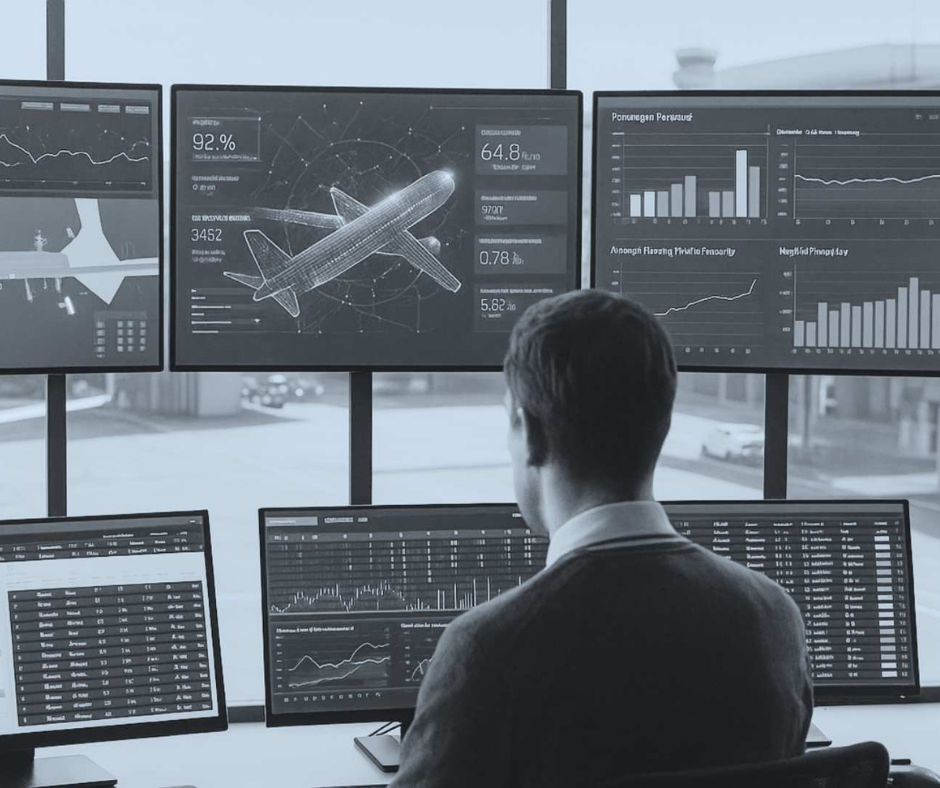
AI-driven tools increasingly act as a “co-pilot” in the Airport Operations Center (APOC), recommending gate swaps, re-sequencing stands, re-prioritizing cleaning or turnarounds, and simulating “what if” scenarios in real time.
- Predict maintenance and reduce failures
Predictive models can identify early warning signs of issues in baggage handling systems, passenger boarding bridges, and key facilities, helping maintenance teams intervene before failures and last-minute surprises occur.
- Detect anomalies and manage disruption
AI is well suited for identifying patterns in passenger flows, security alarms, or baggage misroutes that humans would struggle to see quickly, allowing faster mitigation and more stable performance during irregular operations.
Automation and robotics on the ground
Automation and robotics will continue to appear across the airport, especially where repetitive, physically demanding, or safety-critical tasks are concerned:
- Check-in and baggage drop
Self-service kiosks and automated bag drops that read IDs, print bag tags, and validate baggage dimensions are becoming standard. The next step is tying these systems into smarter resource plans and biometrics for truly frictionless processing.
- Baggage handling and apron operations
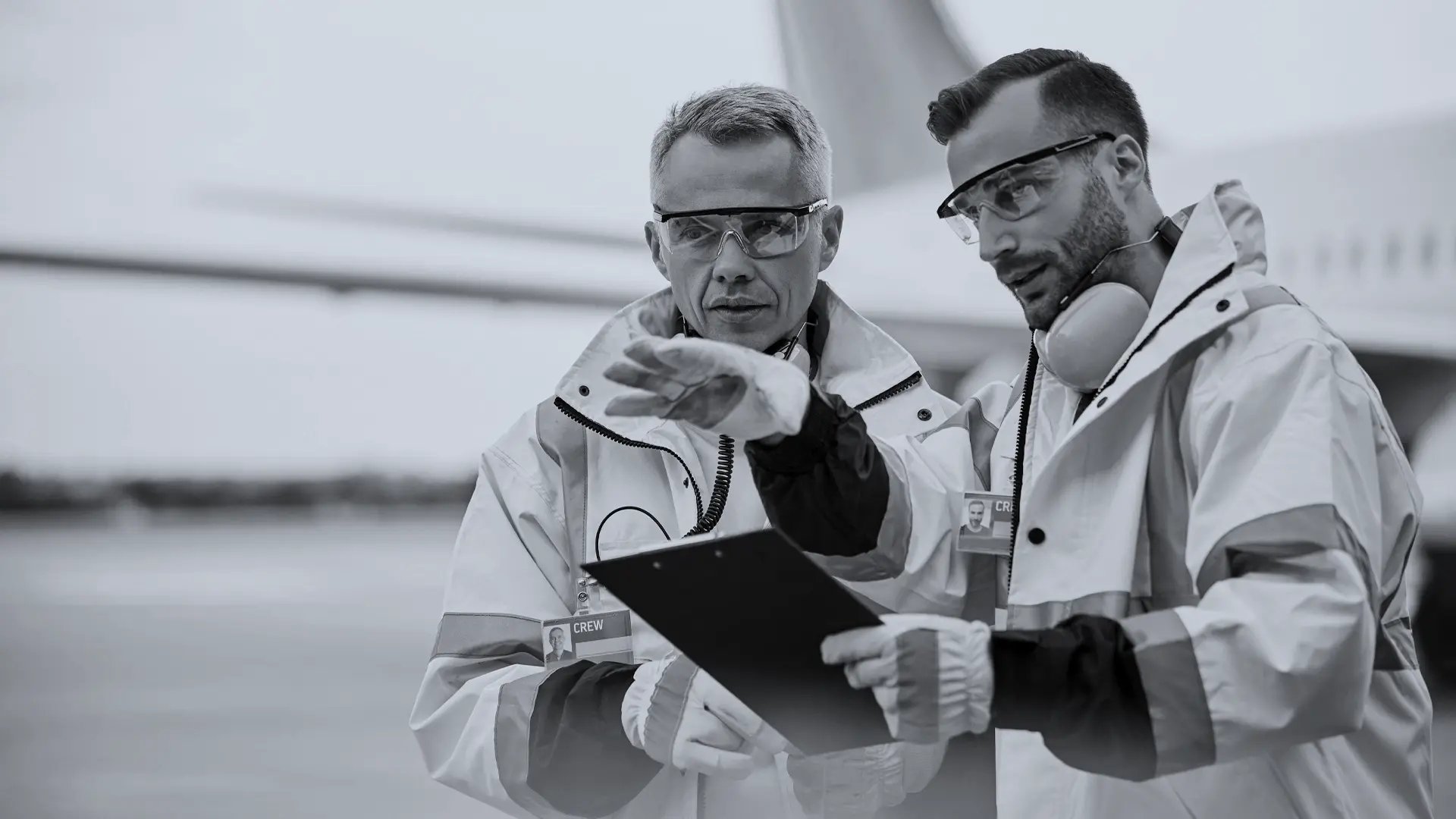
Advanced robotic systems that can sort, load, and unload bags faster and more accurately than manual handlers are being used for baggage operations, improving efficiency and reducing the chances of bags being mishandled or lost. Airports may even begin to incorporate fleets of autonomous vehicles that transport and load cargo and baggage between the terminal and aircraft. Schiphol Airport in Amsterdam has been testing the technology to see how it might integrate into its existing infrastructure.
- Cleaning and sanitization
Airports have also begun using robots for cleaning and sanitizing restrooms and public areas. These robots – typically equipped with UV lights or disinfectant sprayers – can operate autonomously, ensuring consistent and thorough cleaning.
- Air traffic management and digital towers
Innovations are emerging for next-generation control towers that are fully digital and sometimes remote from the airport itself. They use artificial intelligence and other tools to enhance air traffic management, expanding viewpoints for air traffic controllers and serving as a contingency tower when needed.
- Guidance robots
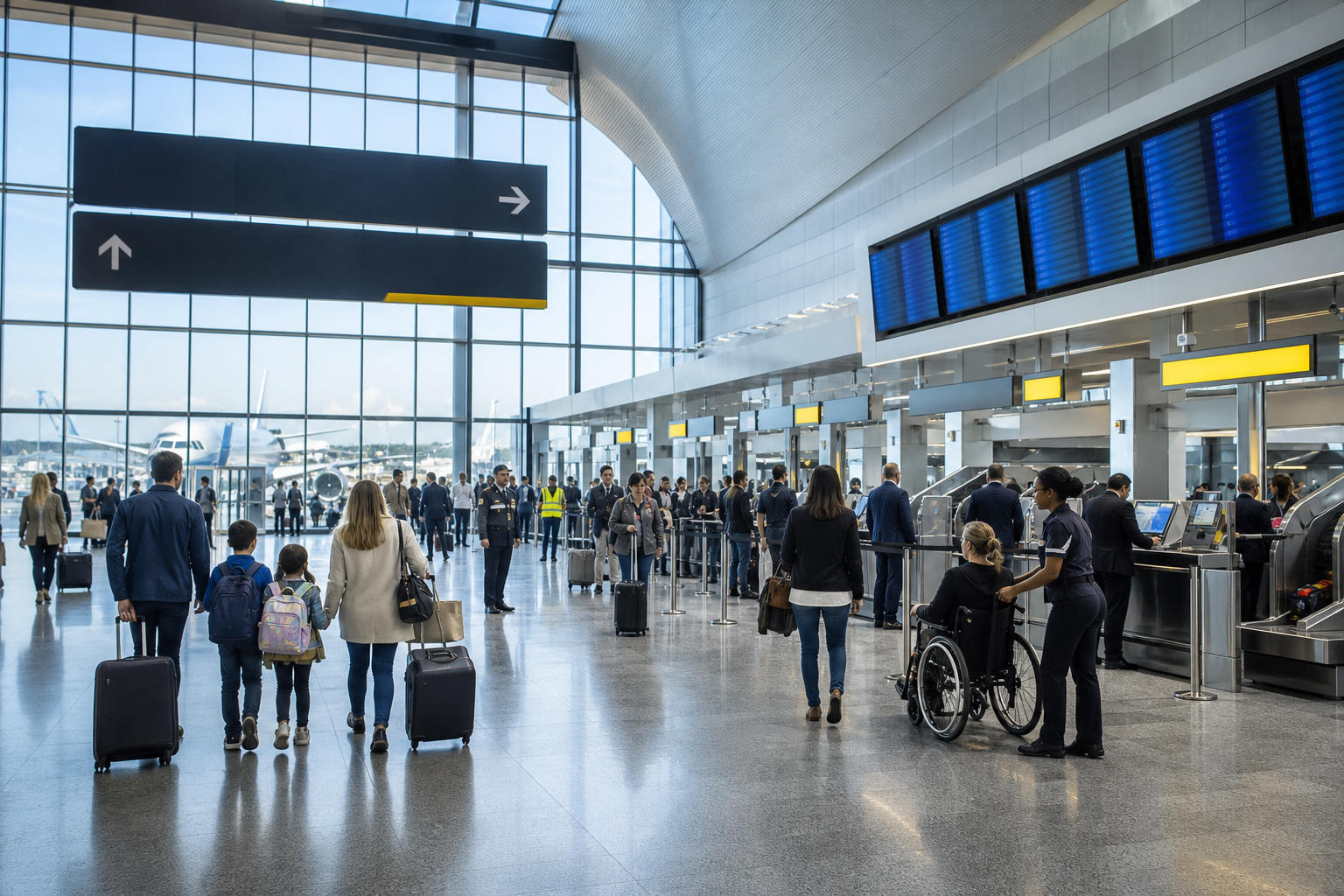
Some airports have also introduced robots that can provide information, guide passengers to their gates, or even carry luggage. These robots are particularly advantageous for travelers with disabilities, as they can assist them in navigating the airport without additional help.
2. Next-generation security
Airports around the world are also starting to utilize new technologies like AI and automation in all aspects of their security operations:
- 3D CT security checkpoints
Automated security systems increase efficiency, maintain high screening standards, and ensure a safe travel experience for passengers. This technology includes 3D CT scanners that automatically detect prohibited items, along with advanced body scanners that reduce the need for physical pat-downs.
- Automated lanes and dynamic routing
Integrated lanes with automated trays, tracking, and real-time monitoring enable dynamic allocation of passengers to lanes, helping security operations react quickly to changing demand.
- Cybersecurity
Given the growing demand for interconnected IT, Internet of Things (IoT), and data platforms, many airports are allocating significant budget to protect online operations and passenger data.
3. Biometrics and digital identity: Building the single-token journey
Biometric technology is ever evolving, and has vast potential to create a safer, more seamless passenger experience. The technology is convenient, scalable, and cost-effective, making biometrics an airport technology trend to continue watching.
From individual use cases to an identity spine
In 2026, the key shift here is from standalone deployments to multi-faceted strategies:
- Single-token journeys
Facial or iris templates are linked to the travel document and boarding pass, enabling passengers to move through check-in, bag-drop, security, lounge, and boarding with a single digital token instead of repeatedly presenting documents.
- Digital travel credentials and wallets
Digital travel credentials (DTCs) and mobile identity wallets will become more common, allowing passengers to store verified identity information on their devices and share it with airlines, airports, and border agencies under privacy-by-design frameworks.
Operational and business implications
For airport operations, biometrics is not just about “faster gates” and identity verification. It creates:
- Stabilized throughput and better planning
More predictable processing times at ID checks make it easier to model and plan capacity at security, immigration, and boarding.
- Stronger collaboration with border agencies
Airports that align early with national identity programs and border systems will be better positioned to offer seamless curb-to-gate experiences.
- New commercial use cases
With the right consent and governance, biometrics and digital identity can be extended to lounges, parking, and retail, creating more personalized offers and smoother payments.
4. Remote and contactless technology
Contactless technology is no longer just about hygiene. In 2026, it is central to how airports manage capacity, reduce friction, and extend the airport experience far beyond the terminal building. Passengers could soon look forward to a fully contactless and, at times, remote experience.
Off-airport and remote processing
Remote processing is evolving from isolated trials into a strategic lever for passenger satisfaction and smoother operations:
- Remote bag-drop and city check-in
Bag-drop in city centers, hotels, cruise terminals, and convention centers can help shift demand away from peak periods at curb and check-in.
- Remote baggage screening and through-check
Smarter screening processes and data sharing between airlines and airports reduce the need for passengers to re-check bags on connections, shortening minimum connection times and reducing stress.
Mobile-first, contactless touchpoints
Mobile devices are becoming the primary interface for the journey:
- App-centric journeys
Pre-trip information, wayfinding, dynamic gate updates, bid-for-upgrades, ancillary sales, and disruption handling are increasingly integrated into airline and airport apps.
- Inflight entertainment: Certain airlines offer a touchless experience to passengers and encourage a bring-your-own-device model. Innovations like this can help increase onboard hygiene, as well as passenger comfort.
- Airport shopping: The future of airport retail is already being shaped by contactless technology. In Dallas Love Field Airport (DAL), Chicago Midway International Airport, and many other airports, you will find the Hudson Nonstop store. Using Amazon’s Just Walk Out technology, these stores enable travelers to enter with a swipe of their credit card or “Tap to Pay,” take the products they’re looking for, and simply walk out of the store. These stores reduce checkout-line friction so passengers can be well on their way to the gate faster.
5. Virtual Queuing
Tying in with contactless technology, virtual queueing is an increasingly popular airport technology revolutionizing the way people wait in line. Virtual queueing manages passenger demand by creating a virtual line or space for passengers.
How virtual queuing works today
Passengers pre-book a time slot for a touchpoint – often security, but increasingly also check-in, immigration, and curbside drop-off. The booking can be managed via:
- Airport or airline app
- Website
- Email or SMS
- Kiosks or agent-assisted channels
When booking, passengers receive a confirmation (often with a QR code) and access to a dedicated lane during their selected window, typically in 10- to 20-minute intervals.
Where virtual queuing is headed
In 2026, we will see:
- Multi-touchpoint virtual access
One “journey slot” could cover multiple processes (check-in, security, passport control), orchestrated by a central planning engine.
- Dynamic capacity and pricing
Integration with AI forecasting allows airports to adjust slot availability, length, and even pricing for premium access in real time based on demand and service-level targets.
- Deeper airline integration
Airlines can nudge passengers into specific slots based on departure times or aircraft boarding strategies, turning virtual queuing into a joint planning tool.
6. Airport management software: The platform for connected operations
Most airports now have some form of operational software setup. The shift in 2026 is from fragmented tools and local optimizations to connected, cloud-based platforms that function as an airport’s “operating system”.
From disjointed systems to a unified platform
A modern airport management platform brings together:
- Forecasting and planning – Demand and capacity forecasting across check-in, security, immigration, baggage, and stands/gates
- Real-time operations – Live dashboards, alerts, and scenario planning for APOC and stakeholders
- Resource management – Allocation of counters, lanes, stands, gates, and staff based on live and forecasted demand
- Data integration – Ingestion of data from your Airport Operational Database (AODB), flight schedules, airlines, handlers, security, biometrics, and IoT sensors into a single, trusted source
The next frontier is digital twins and simulation: using real-time data to simulate future states of the airport, test “what if” scenarios, and understand the operational impact of schedule changes, disruption, or infrastructure projects before they happen.
Transform airport operations using software
Copenhagen Optimization has developed Better Airport: a cloud-based airport management SaaS platform that gives all airports, regardless of size, a simpler way to run core operations.
As a common operating platform, the system enables everyone you collaborate with, internally and externally, to easily access and use all functionality.
Through machine learning, Better Airport helps you make the most of all the data points that your airport has access to – including those collected by the airport technologies mentioned above.
Better Airport allows airports to mix and match nine different modules to create a solution perfectly suited to their own operations. Every module can be connected, making it easy to forecast, understand, and plan passenger, baggage, and aircraft flows throughout the airport. We call this way of working Connected Operations – and we believe it’s the future of airport technology.