Better Airport
At its core, Better Airport is a cloud-based airport management SaaS platform that gives airports of all sizes a simpler way to run core operations including check-in, baggage, security, stand/gate, and immigration.
-1.png?width=1080&height=1080&name=Design%20uden%20navn%20(19)-1.png)

Recent disruption at U.S. airport security checkpoints has highlighted something many airport operators already know: checkpoint performance is becoming increasingly complex. This highlights the increasing importance of local strategies to enhance the performance of airport collaborative efforts with TSA and outside the box thinking on the role of airports in checkpoint performance and related customer experiences.While the partial federal government shutdown has brought renewed attention to security operations, the broader challenge goes beyond any single political event. Airport checkpoints are operating in an environment where staffing variability, passenger surges, and changing traveler expectations can combine quickly and unpredictably. Even when the immediate disruption passes, the conditions that expose checkpoints to volatility may remain.
For airports, that matters because security is not just a processing function. It is one of the most visible indicators of how well the airport is operating overall. When screening capacity tightens, the effects are felt far beyond the checkpoint itself: queues build rapidly, passengers lose confidence, terminal congestion grows, and operational pressure spreads across teams.
This is why checkpoint resilience is increasingly becoming a strategic issue, not just a day-of-operations concern.
Security checkpoints have always required careful balancing of demand, staffing, and space. What is changing is the margin for error.
In a more constrained environment, even relatively small reductions in screening capacity can have outsized effects. A few fewer officers, uneven lane availability, or an unexpected passenger surge can create queue growth that escalates quickly and becomes difficult to recover from during peak periods.
That can lead to:
rapid queue buildup
uneven use of available checkpoints or lanes
greater passenger stress and missed flights
spillback into ticketing and terminal areas
pressure on airport service metrics and brand perception
For airport leaders, the question is no longer simply how to respond when disruption occurs. It is how to build an operating model partnership with the TSA that is more resilient when variability becomes a recurring condition.
Airports cannot control federal funding cycles or national workforce dynamics. They can, however, influence local measures to enhance the informational insights that flow to operating partners from a data rich environment that can influence how well passenger demand is understood, anticipated, and managed.
That starts with a shift in mindset: from reacting to queues after they form, to enhancing airport planning capabilities that enhance insights to how demand and capacity interact before pressure builds.
Two capabilities are becoming especially important:
1. Why Predictive Operational Planning Matters at Security Checkpoints
Checkpoint operations need a clearer view of when demand will arrive, how it will distribute across checkpoints, and what different staffing scenarios may mean for throughput and waiting times.
This allows airports to support TSA in its ability to test options before the peak hits, rather than improvising in real time.
2. How Demand Shaping Can Reduce Checkpoint Congestion
In a volatile environment, resilience is not only about maximizing capacity. It is also about influencing demand patterns so that passenger arrivals are less concentrated and easier to absorb.
When airports have tools to smooth peaks, improve predictability, and reduce unmanaged clustering, they can create more stability without necessarily adding infrastructure.
This is where technology can play an important role — not as a substitute for staffing, but as a way to make existing operations more precise, collaborative, and adaptable.
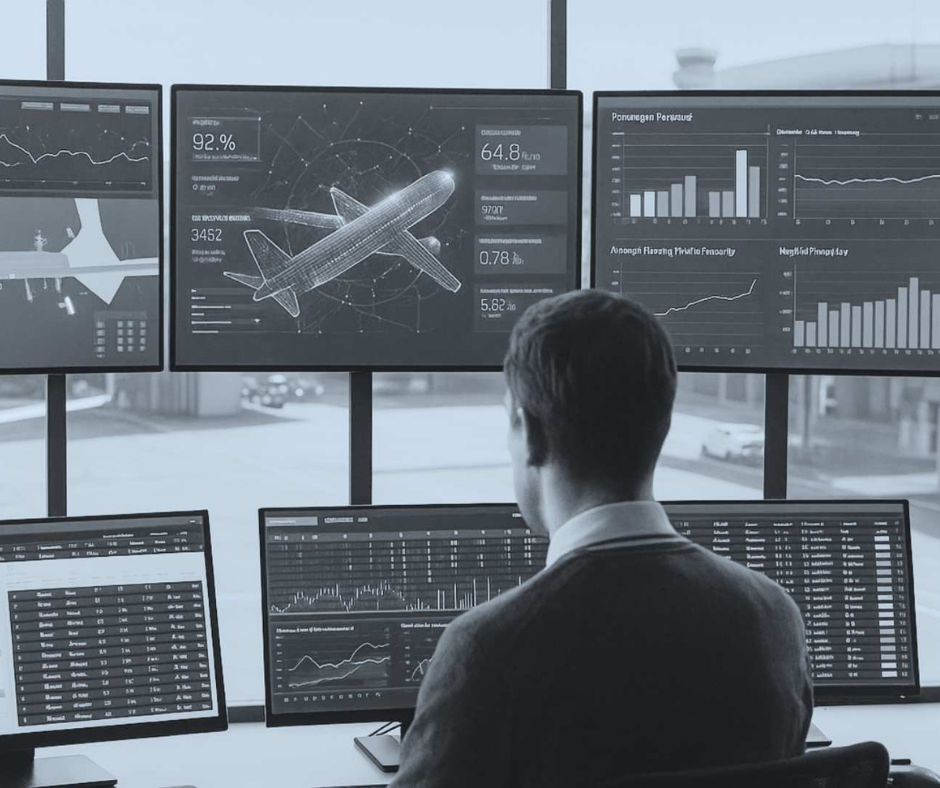
For example, predictive security planning tools can enhance the airport’s ability to assist TSA partners in better understanding passenger arrival patterns, evaluate reduced-capacity scenarios, and optimize lane planning based on expected demand. In a constrained environment, that kind of visibility can reduce guesswork and improve day-of-operations decision-making.
Similarly, virtual queuing can give airports a practical way to shape demand while improving the passenger experience. By allowing travelers to reserve screening time windows, airports can reduce unmanaged peaks, balance flows, and offer passengers more certainty at moments when confidence matters most and stress levels dictate customer experience.
Taken together, these approaches support a more structured operating model:
The value is not only shorter queues. It is greater operational stability.
Checkpoint performance has become one of the clearest signals of airport quality. Passengers may not see the planning behind the operation, but they feel immediately when it breaks down.
In the current environment, airports should expect:
more frequent periods of volatility
less flexibility in staffing assumptions
lower passenger tolerance for uncertainty
increasing expectations that the airport is actively engaged in curating creative solutions
That raises the importance of resilience strategies that help airports protect reliability using the infrastructure they already have.
The airports best positioned for this environment will likely be those that embrace a role as an enabler of operating ecosystem performance, employing creative system to leverage operational data in ways that enhance the ability of operating partners to forecast and manage demand through strategies that provide elevated data-driven decision making rather than just optional enhancements.
At Copenhagen Optimization, we see this playing out through solutions such as Better Security, Better Forecast, and Better Virtual Queuing, which help airports enhance the information derived from optional data in ways that elevate the value added through partnership with TSA yielding enhanced forecasting and checkpoint operation plans with greater precision, and shape passenger demand more proactively.
The point is not that technology eliminates volatility. It is that airports can enhance their collaboration with the TSA in ways that ensure the airport is better prepared for it — and better equipped to respond in a structured, data-informed way.
The operating environment at U.S. airport security checkpoints is changing.
Whether the trigger is a shutdown, staffing attrition, seasonal peaks, or broader operational uncertainty, airports and TSA are being asked to manage security performance with less room for error. In that environment, resilience depends on more than throughput alone. It depends a new level of collaboration between airports and TSA that increases visibility, coordination, and the ability to anticipate and shape demand before disruption escalates.
For airports, that is the real challenge of the new normal — and the real opportunity.
Long airport security wait times are usually caused by a mismatch between passenger arrivals and available screening capacity. That mismatch can be driven by staffing variability, uneven lane availability, concentrated peak demand, or disruption elsewhere in the terminal.
TSA staffing shortages can increase queue lengths, create uneven checkpoint utilization, raise the risk of missed flights, and cause congestion to spill back into terminal areas such as ticketing and circulation spaces.
Airports can embrace their role as an enabler of the operating ecosystem performance by investing in systems that extract relevant operational insights from site specific data in ways that support TSA operations. Through this closer collaboration with the TSA, checkpoint congestion can be reduced by improving passenger demand forecasting, allow testing of different staffing and lane scenarios, and shaping demand through tools such as virtual queuing.
Checkpoint resilience is the ability to maintain stable performance when staffing, demand, or operating conditions change. It depends on visibility into future demand, flexible planning, and coordinated response.
Virtual queuing can help reduce unmanaged peaks and improve predictability by spreading arrivals more evenly across available screening capacity. Its value is often greatest during periods of uncertainty or constrained staffing.
At its core, Better Airport is a cloud-based airport management SaaS platform that gives airports of all sizes a simpler way to run core operations including check-in, baggage, security, stand/gate, and immigration.